
If you think of your website as a house, On Page SEO is the interior design, the furniture, the paint, and the layout that makes it comfortable for guests. Off-Page SEO, however, is what the neighbors say about your house. It is your reputation, your curb appeal, and the authority you hold in the neighborhood.
Many site owners obsess over keywords and site speed but neglect the vast ecosystem outside their domain. Today, we are diving deep into Off-Page SEO: what it is, why it powers your rankings, and the strategies you need to build a trustworthy digital footprint.
Off-Page SEO plays a significant role in your site’s growth, but it is not a standalone solution. In fact, without a solid foundation of On-Page and Technical SEO, your off-page efforts will not yield positive results. Therefore, before crafting your off-page strategy, we highly recommend reading our comprehensive guide on What is SEO.
What is Off-Page SEO?
Off-page SEO refers to all optimization efforts taken outside of your own website to improve its rankings in search results. While on page SEO focuses on content and structure, off page SEO focuses on building reputation, authority, and trustworthiness.
The goal is simple but critical: to convince search engines like Google that your site is a credible source of information.
Why It Matters: The Power of E-E-A-T
Google uses off page signals to evaluate your site’s E-E-A-T (Experience, Expertise, Authoritativeness, and Trustworthiness). Studies consistently show that a site’s backlink profile and domain authority are strong predictors of ranking success.
Key Takeaway: You can have the best content in the world, but without the “vote of confidence” from other websites, search engines may struggle to trust you.
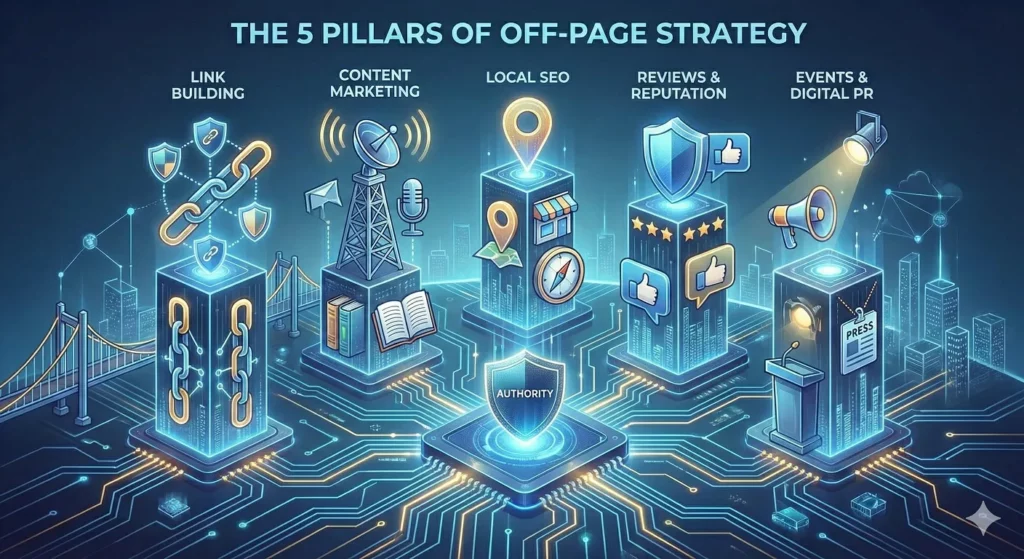
The 5 Pillars of Off Page Strategy
To build a robust off page presence, you need to look beyond just asking for links. Here are the five major categories of tactics you should employ.
1- Strategic Link Building
Link building is the process of acquiring backlinks from other websites. Think of these as votes; the more reputable the voter, the more the vote counts. Quality always beats quantity.
- Broken Link Building: Find dead links on reputable sites in your niche and suggest your content as a replacement. It helps the site owner fix an error and gets you a link.
- Unlinked Brand Mentions: Reach out to websites that mention your brand but haven’t linked to you. A polite request is often all it takes to turn a mention into a backlink.
- Journalist Requests: Use platforms like HARO (Help a Reporter Out) or Connectively to provide expert commentary to reporters. This can earn you high-authority links from major news outlets.
2. Content Marketing & Distribution
Publishing high quality content is the engine that drives natural backlinks.
- Guest Posting: Write articles for other reputable websites. This introduces your brand to new audiences and builds authority.
- Podcasts & Webinars: Being a guest allows you to demonstrate expertise. Show notes often include valuable backlinks.
- Content Syndication: Republish your content on platforms like Medium or LinkedIn. Note: Always use canonical tags to ensure Google knows which version is the original.
3. Local SEO
For businesses with a physical footprint, off-page SEO is vital for showing up in local searches and map packs.
- Google Business Profile (GBP): Optimizing this listing is the single most critical factor for local visibility.
- NAP Consistency: Ensure your Name, Address, and Phone numbers are identical across all directories (Yelp, Yellow Pages, etc.).
Read more about local SEO and its effects on site SEO.
4. Reviews and Reputation
Customer Reviews: Positive reviews on Google and Yelp directly influence local rankings and establish immediate trust with users.
Crisis Management: How you respond to negative reviews also signals your commitment to customer satisfaction.
5. Events and Digital PR
Digital PR: This involves creating newsworthy stories or data studies to gain coverage from authoritative media sites.
Event Marketing: Sponsoring or speaking at events creates “buzz” and generates links from event pages and attendee blogs.
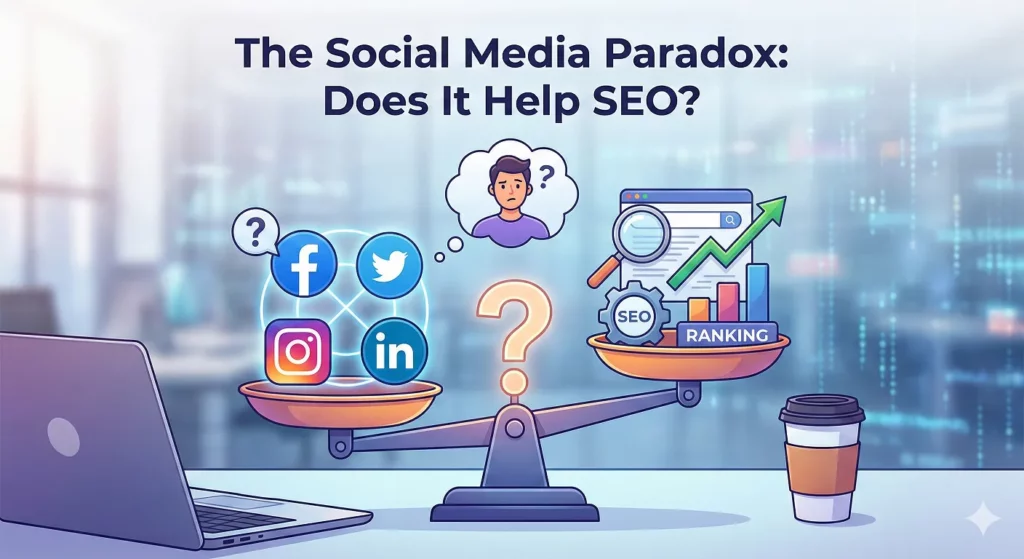
The Social Media Paradox: Does It Help SEO?
A common question in SEO is: “Does social media impact my rankings?” The short answer is no, not directly. Google does not count a Facebook “Like” or an “X” repost as a ranking signal.
However, social media is a critical indirect driver of SEO success.
Here is how social media fuels your off-page engine:
- Driving Traffic & Natural Backlinks: Social media is a distribution channel. The more eyes on your content, the higher the chance a blogger or journalist sees it and links to it from their website.
- Brand Awareness & Search Demand: High engagement on social leads to more people searching for your brand name in Google. These “branded searches” are a powerful signal of authority to search engines.
- E-E-A-T Building: Consistent engagement positions you as an industry expert.
- Local Legitimacy: Social profiles serve as citations. Search engines use them to verify your business details (NAP).
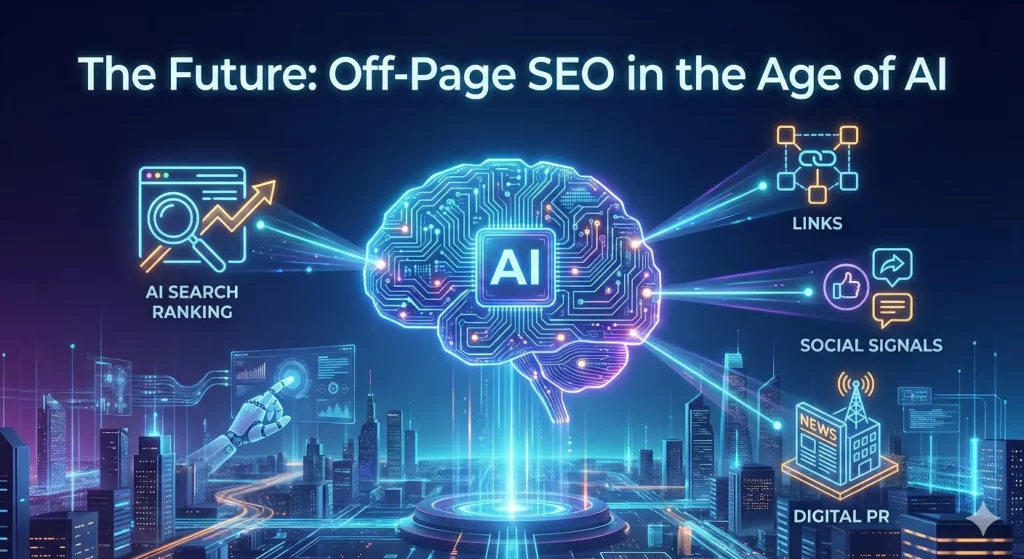
Off-Page SEO in the Age of AI
Off-page SEO is becoming even more critical with the rise of AI tools like Google’s AI Overviews and ChatGPT.
These AI models rely on consensus. When your brand is consistently mentioned and cited across high-quality, trusted websites, AI models are more likely to recognize your content as reliable facts. This increases the likelihood that your brand will be featured as a source in AI-generated answers, keeping you discoverable in the new era of search.
Conclusion
Off-Page SEO is the bridge between great content and high search rankings. You can write the most informative articles in the world, but without the “vote of confidence” from the rest of the web, search engines will hesitate to view you as an authority.
By focusing on building high quality backlinks, engaging with your audience on social media, and managing your local reputation, you do more than just please the algorithm you build a resilient brand. In the era of AI search and E E A T, your reputation is your most valuable asset. Start building relationships today, and the rankings will follow.
Frequently Asked Questions
Is Off Page SEO just about getting backlinks?
No. While backlinks are the most powerful signal, Off-Page SEO encompasses your entire digital reputation. This includes social media marketing, guest blogging, unlinked brand mentions, influencer marketing, and customer reviews. Any activity outside your website that builds authority counts.
Can I buy backlinks to improve my rankings faster?
Avoid this practice. Buying links violates Google’s Spam Policies. While it might offer a temporary boost, it often leads to severe penalties or a permanent ban from search results. Focus on earning links naturally through high quality content and genuine relationships.
How does Social Media affect Off-Page SEO?
Social media does not directly contribute to Google rankings (a Facebook “share” is not a ranking signal). However, it is a crucial indirect factor. It drives traffic, increases brand awareness, and puts your content in front of creators who might link to you from their own websites.
How long does it take to see results from Off-Page SEO?
Off-Page SEO is a long-term strategy. Unlike fixing a technical error on your site, building authority takes time. You may start seeing improved rankings in 3 to 6 months, but building a truly authoritative domain is a continuous, multi-year process.


